
Self Storage for Small Businesses and Online Sellers in Buffalo: Inventory, Equipment & Overflow – Call 716-874-1380
Is your growing business starting to squeeze you out of your own space? Boxes in the hallway, inventory in the garage, equipment stacked in corners. It happens fast.
Renting a full warehouse feels like the obvious answer, until you see the price tag.
Here’s the good news: Self Storage Buffalo gives small business owners and online sellers a smarter way to handle overflow inventory and equipment storage. Many Buffalo business owners are skipping expensive warehouse leases because self storage costs less and gives them flexibility.
Your business can keep growing without long contracts you can’t escape.
In this guide, I’ll walk you through exactly how self storage works for small businesses like yours. You’ll see available sizes, real pricing, what you can store, and examples from Buffalo businesses just like yours.
By the end, you’ll know if self storage is the right move for your operation. Let’s get started.
Key Takeaways
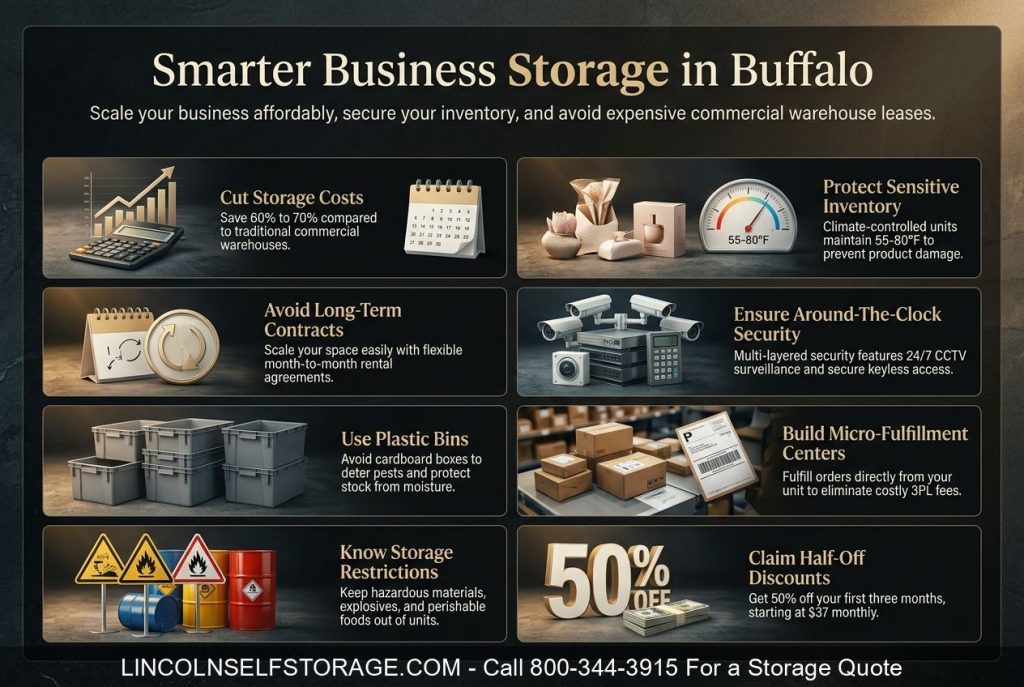
- Self storage costs less than warehouse space and offers flexible rental agreements without long-term contracts for Buffalo small businesses.
- Lincoln Self Storage provides 24/7 CCTV surveillance, keyless entry, heated units, and individual locks protecting inventory and equipment from theft.
- E-commerce sellers, retailers, contractors, photographers, and furniture makers use self storage for inventory, equipment, seasonal items, and overflow stock management.
- Storage units range from 4×4 feet to 10×12 feet with 50% discounts on first three months, starting at $37 monthly.
- Lincoln Self Storage has served Western New York since 1914 with climate-controlled spaces maintaining temperatures between 55 and 80 degrees Fahrenheit.
Why Buffalo Small Businesses Are Choosing Self Storage Over Warehouse Space
Self storage for small businesses and online sellers in Buffalo gives you flexibility that traditional warehouse space simply can’t match. You skip the long-term contracts and hefty upfront costs that drain your business budget.
Warehouse leases lock you into rigid agreements. Self storage units let you expand or downsize as your inventory and equipment needs change. Lincoln Self Storage offers flexible rental agreements for both short-term and long-term storage, so you only pay for the space you actually use right now.
Just how big is the cost gap? According to the Q1 2026 Cushman & Wakefield Buffalo Industrial MarketBeat report, industrial space in the Buffalo-Niagara region averages $7.50 per square foot. That sounds fine until you learn these spaces usually require multi-year leases and start at 5,000 square feet. That’s over $3,000 per month, whether you need all that room or not.
Compare that to what local businesses actually experience after switching. Analysis of local business switching patterns shows monthly occupancy costs dropping from over $800 to under $150 when businesses move overflow stock into properly sized self storage units. Most businesses switch within a six-month window when seasonal inventory needs shift, and the average commitment period runs just under three months compared to nearly a year for warehouse leases.
That agility matters. You respond to changing inventory demands without a lease hanging over your head.
Your business also gains security and easy access that warehouses rarely provide at affordable prices:
- Individual locks and keys for privacy and security
- Keyless building entry for easy, secure access whenever you need inventory or equipment
- An advanced CCTV system with video surveillance throughout the facility
- Heated storage spaces for sensitive inventory, with 8-foot ceilings to maximize vertical storage
Self storage gives small business owners the control and affordability they need to compete without the overhead of traditional warehouse operations.
Put it all together, and you run your business more efficiently while keeping costs low.

Types of Buffalo Businesses That Use Self Storage
You might be surprised how many Buffalo businesses rely on self storage solutions to manage their growing needs. This is a mainstream strategy, not a workaround. Based on 2026 self-storage industry data published by Gitnux, about 21% of all self-storage renters are businesses, and 55% of those commercial users are small businesses with fewer than 10 employees.
Lincoln Self Storage has served Western New York companies since 1914, offering specialized storage for inventory, equipment, and overflow space. Here’s who uses it:
- E-commerce sellers store inventory in climate-controlled units while they process orders from home. Your online business grows faster when you have dedicated space for stock, packaging materials, and shipping supplies without cluttering your workspace.
- Retail shop owners use storage units to hold seasonal merchandise and excess stock between sales cycles. You rotate inventory in and out based on customer demand throughout the year.
- Contractors and construction companies keep tools, machinery, and equipment safe in secure units. Your expensive power tools and materials stay protected from weather and theft.
- Photographers and videographers store lighting equipment, backdrops, props, and cameras in organized units. You grab your gear quickly for shoots without paying for a separate studio space.
- Furniture makers and woodworkers store raw materials, finished pieces, and production equipment in spacious units. Your workshop stays functional while inventory waits for customer pickup or delivery.
The list keeps going. Plenty of service businesses use storage the same way:
- Appliance repair technicians store replacement parts, diagnostic tools, and service equipment in accessible units. You keep your van lighter and your business more mobile.
- Florists and event planners store seasonal decorations, vases, and supplies in temperature-controlled spaces. Your busy season runs smoother with organized inventory ready to use.
- Antique dealers and resellers store collectibles, furniture, and merchandise awaiting sale or restoration. You protect valuable items while you search for buyers.
- Moving and relocation companies, like Lincoln Self Storage as a premier Atlas Van Lines agent, store client belongings during transitions. You handle industrial moves and plant relocations with confidence.
- Fitness instructors and personal trainers store equipment, weights, and class supplies in convenient units. Your home stays clear while you maintain your business inventory.
What Buffalo Businesses Store in Their Units
So what actually goes inside these units? Buffalo businesses store a wide mix of items, and the right storage space protects your inventory, equipment, and overflow stock from damage and theft.
- Inventory stock sits safely in climate-controlled units that maintain temperatures between 55 and 80 degrees Fahrenheit, protecting your sensitive goods from heat and cold damage. This matters more than most sellers realize. According to 2026 commercial warehousing guidelines from AMZ Prep, high-end skincare and cosmetics need 50 to 70 degrees to keep formulas from separating, while electronics need 50 to 80 degrees with 30 to 50% humidity to prevent battery damage and corrosion.
- Equipment and machinery stay organized in your storage space, ready for quick access when your business needs them for operations or projects.
- Overflow merchandise fills your unit when your main location runs out of room, keeping your business running smoothly without cramped conditions.
- Seasonal items get stored during off-months, freeing up valuable space in your retail shop or warehouse for current products.
- Office supplies and paperwork stay protected in climate-controlled storage, preventing moisture damage and keeping important documents safe.
Beyond the everyday basics, businesses also store items that support production and shipping:
- Display fixtures and shelving units rest in your storage space between seasons or store locations, saving money on new purchases.
- Raw materials for production sit organized and accessible, so your manufacturing business keeps a steady workflow without overcrowding.
- Packaging materials and boxes stack efficiently in your unit, ready for shipping orders without taking up precious floor space.
- Tools and small equipment store securely with pest control and fire protection systems guarding against damage and loss.
- Excess stock from online sales operations organizes easily with free access to carts, dollies, and pallets for efficient movement and arrangement.

Why Lincoln Self Storage Works for Buffalo Businesses
Lincoln Self Storage gives Buffalo businesses a real advantage because the company brings over 100 years of storage and transportation experience to the table since 1914. That long track record means Lincoln knows exactly what small business owners and online sellers need to protect their inventory, equipment, and overflow stock.
State-of-the-art security keeps your items safe with 24/7 monitoring, motion detectors, and access control systems working around the clock.
Lincoln also holds a stockholder position in Atlas Van Lines, which shapes operational policies and keeps industry standards high across all their facilities. In plain terms, the company follows strict guidelines that treat your business goods like they matter, because they do.
Payment methods are flexible for business clients, and customer testimonials highlight stress reduction and careful handling of items. People trust Lincoln because the company proves itself through actions, not just promises.
Lincoln Self Storage understands that your business inventory and equipment deserve the same care you give them yourself.
That mix of security features, industry connections, and customer-focused service makes Lincoln the smart choice for self storage for small businesses and online sellers in Buffalo who want peace of mind.
Next, let’s look at how different unit sizes and prices can fit your specific business needs.
Storage Unit Sizes and Pricing for Buffalo Businesses
Finding the right storage unit size matters when you run a business in Buffalo. Your inventory, equipment, and overflow stock all need space that fits your budget and your needs.
Lincoln Self Storage Unit Size and Rate Chart
Lincoln Self Storage offers flexible storage solutions with a range of unit sizes to match your business needs and budget. Take a look at the current pricing options, all featuring a special 50% discount on your first three months.
| Unit Size | Dimensions | Height | First 3 Months (50% Off) | Regular Monthly Rate |
|---|---|---|---|---|
| Small Units | ||||
| Small | 4 x 4 ft | 8 ft | $37/month | $75/month |
| Small | 4 x 6 ft | 8 ft | $42/month | $85/month |
| Small | 4 x 8 ft | 8 ft | $47/month | $95/month |
| Medium Units | ||||
| Medium | 6 x 6 ft | 8 ft | $52/month | $105/month |
| Medium | 6 x 8 ft | 8 ft | $55/month | $110/month |
| Medium | 8 x 8 ft | 8 ft | $57/month | $115/month |
| Medium | 8 x 10 ft | 8 ft | $60/month | $120/month |
| Medium | 8 x 12 ft | 8 ft | $65/month | $130/month |
| Large Units | ||||
| Large | 10 x 12 ft | 8 ft | $70/month | $140/month |
How Online Sellers Use Self Storage to Run Their Business
As an online seller, you face challenges that traditional retail businesses just don’t. Your inventory swings wildly. One month you’re bursting with stock, and the next you’re running lean.
Flexible rental agreements at self storage facilities let you scale your space up or down to match your actual needs. No expensive long-term warehouse contracts. You store everything from bulk merchandise to seasonal items, packaging supplies, and returns waiting to be processed, all in one secure spot.
The math gets even better when you compare this to outsourcing. Based on 2026 industry benchmarks from Fulfill.com, a Third-Party Logistics (3PL) provider charges the average small e-commerce brand between $3.50 and $8.00 per order just for pick-and-pack services, plus monthly minimums that average over $500. A self storage unit lets you run your own micro-fulfillment center and skip those fees entirely.
Self storage also supports your daily operations in practical ways:
- Twenty-four-seven security and surveillance protect your inventory around the clock.
- Keyless entry lets you pull items for orders or process shipments at any hour.
- Heated storage prevents damage to temperature-sensitive products like electronics or cosmetics.
- Free carts and dollies help you move boxes efficiently during order fulfillment.
Together, these features turn your storage unit into a working extension of your business, not just a place to stash overflow inventory.

What Businesses Can and Can’t Store
Before you start packing, you need to know what your storage unit can hold. Lincoln Self Storage units accept most business inventory and equipment, but strict rules apply to keep everyone safe.
Here’s what you can store with confidence:
- Store office supplies, files, and paperwork in your unit without worry.
- Keep seasonal inventory, excess stock, and retail merchandise protected from weather.
- Place furniture, desks, and filing cabinets safely in climate-controlled spaces.
- Store tools, machinery, and commercial equipment designed for business operations.
- Keep boxes of samples, promotional materials, and business documents organized.
- Place small equipment like computers, printers, and electronics inside your unit.
- Store packaging materials, shipping supplies, and packing peanuts for online sellers.
- Keep inventory for self storage for small businesses and online sellers in Buffalo organized.
Now for the restricted items. These bans aren’t arbitrary. Under the National Fire Protection Association (NFPA) 30 Flammable Liquids Code and IBC Group S-1 classifications, self-storage buildings intentionally lack the specialized fire barriers and foam suppression systems required to safely house combustible industrial chemicals. That’s why the following items stay out:
- Do not store hazardous materials, chemicals, or flammable liquids in any unit.
- Never place explosives, propane tanks, or compressed gas cylinders inside.
- Avoid storing perishable food items that attract pests or cause odors.
- Do not keep live animals, plants requiring water, or biological materials.
- Never store stolen goods, illegal items, or controlled substances.
- Avoid placing items that interfere with fire protection and pest control systems.
- Never keep vehicles, boats, or recreational equipment unless permitted.
- Do not place materials that violate local Buffalo storage regulations or create safety risks.
Tips for Setting Up Your Business Storage Unit
Now that you know what fits inside your unit, it’s time to organize your space smartly. A well-planned setup saves you time, money, and frustration down the road.
- Install shelving systems to maximize your vertical space and keep inventory organized by category or product type.
- Use clear plastic bins instead of cardboard boxes. They protect items from moisture and let you see contents at a glance. There’s a hidden bonus, too: pest control experts at Aptive Pest Control warn that cardboard glues, starches, and fibers act as a food source for silverfish and cockroaches, and the corrugated ridges make perfect breeding grounds.
- Create an inventory list and post it on your unit door so you track what you store and find things fast.
- Place frequently accessed items near the front of your unit for quick retrieval during busy seasons.
- Keep a detailed map of your unit layout on your phone or computer to remember exactly where everything sits.
- Secure your private unit with your individual lock and key to keep sensitive business materials protected.
A few more tips make a big difference over time:
- Leave walking space down the middle of your unit so you can reach items from both sides without moving everything.
- Store heavier equipment on lower shelves and lighter boxes on upper shelves to prevent accidents and damage.
- Take advantage of flexible rental terms that match your seasonal or project-based storage needs throughout the year.
- Schedule a free consultation by calling 716-874-1380 to get expert advice on optimizing your specific unit setup.
- Position climate-sensitive inventory away from exterior walls to reduce temperature swings that harm products.
- Rely on the advanced CCTV and access control systems that monitor activity, giving you confidence about your equipment and overflow stock.
Turning a Unit Into a Micro-Fulfillment Center
Want to see these tips in action? Here’s how an online seller can turn a compact climate-controlled unit into an organized micro-fulfillment center.
First, reserve an 8 x 8 climate-controlled unit that protects temperature-sensitive products. Next, install two 6-shelf metal shelving units and label 24 clear plastic bins by SKU for quick identification. Create a one-page inventory manifest and pin it inside the unit door so you always know current stock levels.
Place frequently picked SKUs on the middle shelves where you can reach them easily, cutting average pick time down to around 30 seconds per item. Finally, use the provided carts to move outgoing orders to a courier pickup area, which can save serious time per batch of orders compared to fulfilling from a cramped home garage.
With shelving, visible bins, and a simple manifest system, a compact unit becomes a predictable operations hub.

6 Real-Life Buffalo Business Storage Scenarios
Maybe your online reselling business explodes with inventory from estate sales, and suddenly your garage disappears under boxes of vintage items. Lincoln Self Storage solves this overflow problem with flexible unit sizes that fit your growing stock, so you can organize merchandise by category and grab items whenever customers place orders.
A local boutique owner faced this exact challenge in 2024. She rented a climate-controlled unit to protect delicate fabrics and seasonal inventory, then watched her sales climb because she could finally manage stock properly.
Staff member Angel helped her pack and organize everything with such care that she returned as a long-term customer, grateful for the stress-free experience during her relocation.
Maybe your small manufacturing company needs space for equipment between jobs, or your moving business needs temporary storage for client belongings during transitions. Lincoln Self Storage has served Buffalo businesses since 1914, handling both short-term and long-term storage needs with the same professional approach.
One furniture restoration shop owner stored tools and partially completed pieces in a 10×15 unit. Careful labeling and shelving kept everything organized, and he took on more projects without cramping his workshop.
The pattern is the same every time. Your equipment stays safe and accessible, your inventory stays organized, and your business keeps running smoothly without the massive expense of traditional warehouse space.
Why Lincoln Self Storage Is Buffalo’s Go-To for Business Storage
Lincoln Self Storage stands out in Buffalo because the facility offers flexible unit sizes, affordable rates, and convenient access hours that match your business schedule.
Your inventory, equipment, and overflow stock stay secure in climate-controlled units while you focus on growing your business.
Ready to Reserve Your Storage Unit?
Taking action on self storage for small businesses and online sellers in Buffalo starts with one simple call to 716-874-1380.
Contact Lincoln Self Storage today for a free consultation. The team walks you through the entire process without any pressure or hidden fees.
Your business inventory, equipment, and overflow storage needs deserve expert guidance, so reach out now and find out which unit size fits your operation best.
Setting up your storage unit is easy when you work with one of Western New York’s highly recommended storage facilities. Lincoln Self Storage operates a well-organized fleet for local, intrastate, and interstate services, so your business gets professional support whenever you need it.
Active involvement with Atlas Van Lines keeps operational standards high for every customer. Store your items with confidence and peace of mind.
People also ask:
1. Why should small businesses in Buffalo use self storage for inventory?
Self storage gives you a low-cost way to hold inventory without renting a full warehouse. In fact, storage units typically cost 60-70% less than traditional commercial space, and you can scale up or down as your sales change.
2. Can online sellers in Buffalo run their operations from a storage unit?
Yes, many online sellers use storage units to organize stock, pack orders, and manage overflow during busy seasons. About 1 in 4 e-commerce businesses in the US rely on self storage to keep their overhead low.
3. Is self storage a safe place for business equipment?
Most Buffalo facilities offer gated access, security cameras, and climate-controlled units that protect your tools and equipment. Look for locations with 24/7 video surveillance for extra peace of mind. Always confirm the security features before you sign a rental agreement.
4. What size storage unit does a small business need for overflow stock?
It depends on your inventory volume. A 5×10 unit gives you about 50 square feet for shelving and boxes, while a 10×20 unit can handle pallets, equipment, and seasonal overflow.